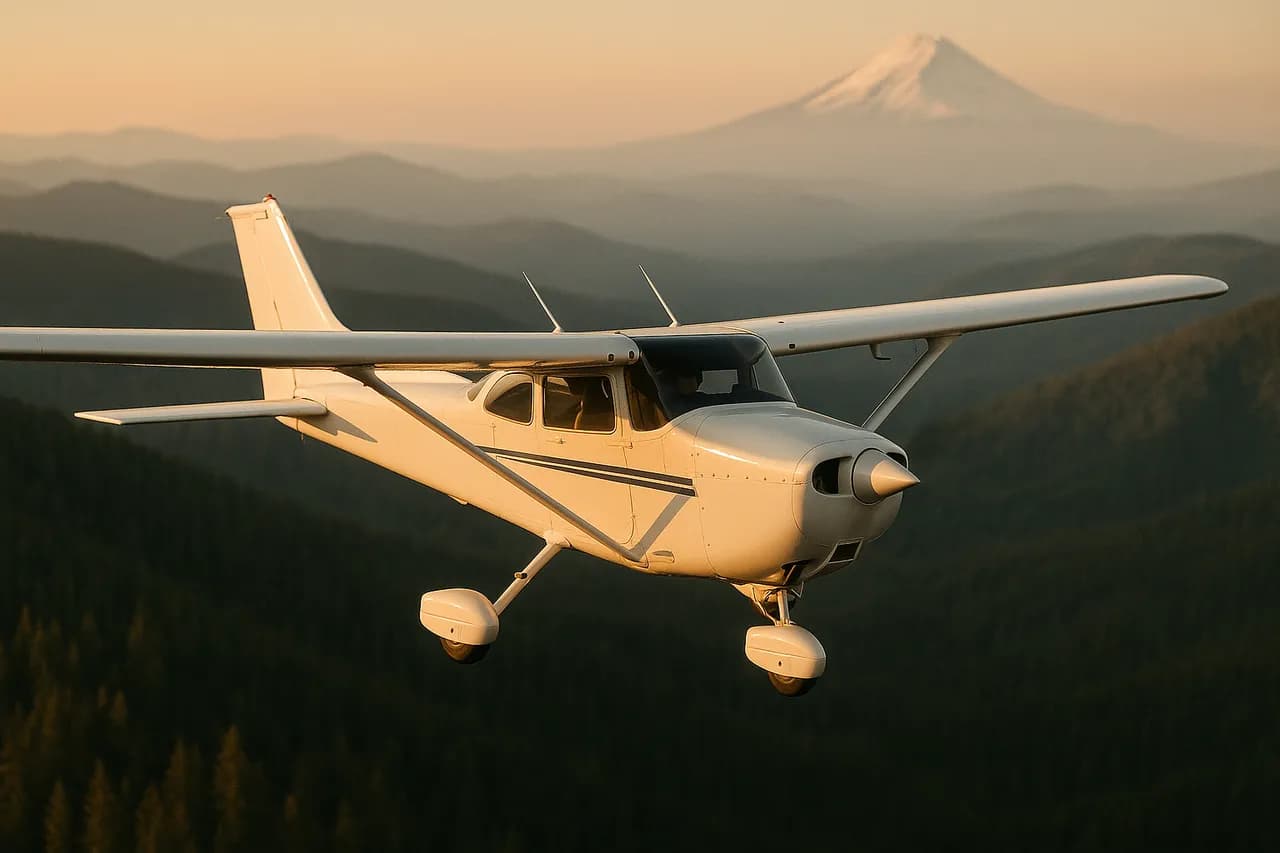
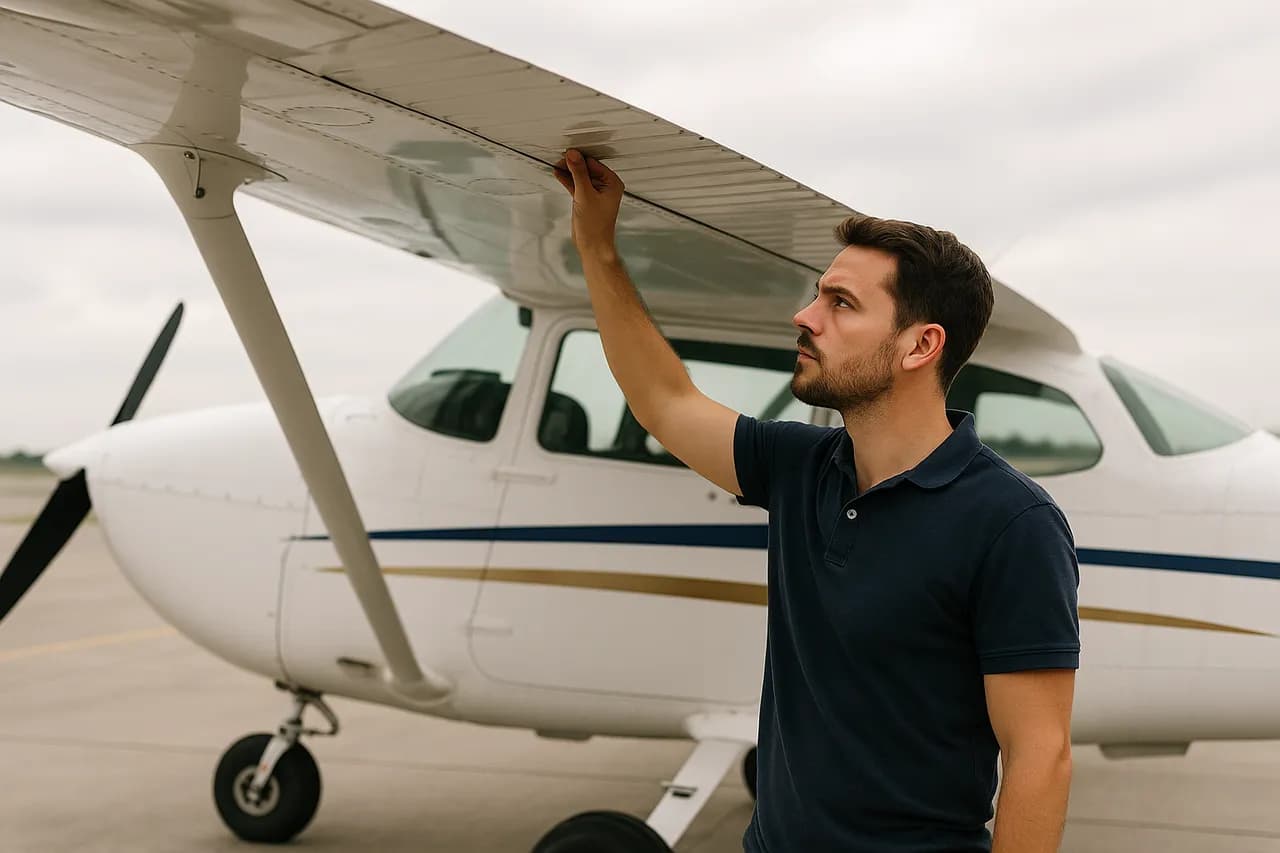
Private Pilot Licence theory made enjoyable and easy to understand, with full English terminology and an unlimited exam simulator.

Designed to help beginners truly understand aviation
Every chapter is told in plain language with real examples and memory tricks.
Keeps the English terms used in real exams alongside clear explanations.
Choose categories, question count and mode, with answers and explanations.
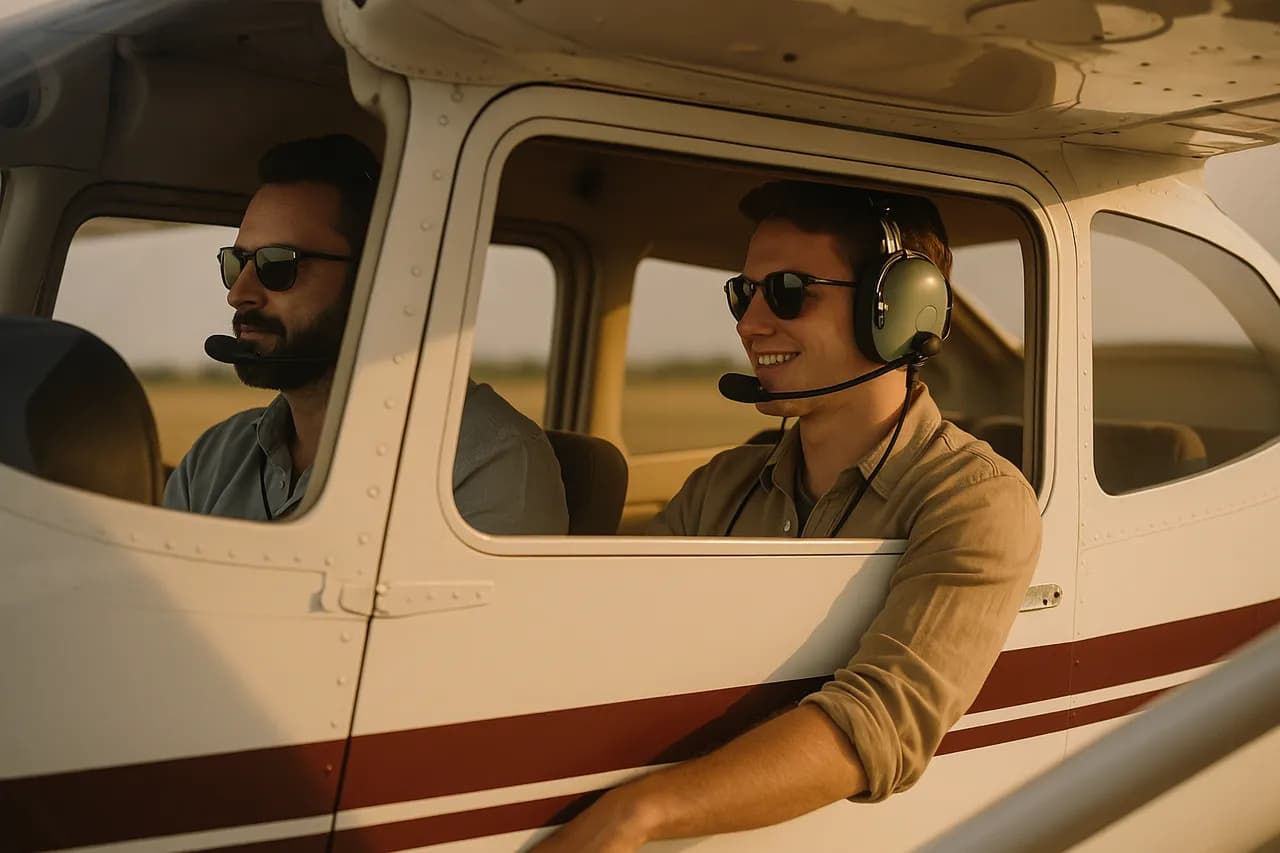
Build your flight-theory foundation one subject at a time, in plain language with the real English exam terms β perfect for beginners with no background.
Covering every subject on the exam

Every pilot began with no background at all. Learn a little at a time, at your own pace, and you'll find flying is closer than it seems.
We believe aviation knowledge should not be limited by the price of textbooks or language barriers. This project gathers and rewrites flight theory so anyone can access it for free β helping students, enthusiasts and the curious begin their journey to the sky with confidence.
See immediately which categories you should review after each exam.
Answers for anyone starting the private-pilot journey in Thailand
A PPL (Private Pilot Licence) lets you fly a private aircraft for non-commercial purposes β for leisure or personal travel. It is the first licence on a pilot's path, before progressing to a Commercial Pilot Licence (CPL) later.
Typically you: get an aeromedical certificate (at least Class 2), enrol at an approved flight school, study the nine core theory subjects, fly with an instructor until you meet the required hours, then sit the theory exams and the flight Skill Test. Confirm the current requirements directly with the Civil Aviation Authority of Thailand (CAAT) and your flight school.
It depends on how often you fly and your own progress β many people take from a few months up to about a year. The international minimum flight time is roughly 40β45 hours (EASA, for example, requires 45 hours). Actual figures depend on the syllabus and the regulator, so confirm with your flight school.
Cost depends on the school, the training aircraft, and how many flight hours you personally need, so it varies widely. We recommend asking a flight school directly for current pricing and package details so you get a figure that reflects your real situation.
No prior flying experience is required β the PPL syllabus is designed for beginners. The challenging parts are passing the nine theory subjects and building flying proficiency. With steady practice, most people can do it. This site helps you build the theory foundation in plain language before you start real training.
You can usually begin training before the licensing age, and typically fly solo at around 16. Holding a PPL is usually set at a minimum age of 17. Exact thresholds vary by regulator, so confirm with CAAT and your flight school.
Yes. PPL students need an aeromedical certificate of at least Class 2 β a health check by an approved Aeromedical Examiner (AME) confirming you are physically fit to fly. Ask the regulator or your flight school where to take it.
English matters, especially for radio communication and technical terms. ICAO standards require pilots using the radio to meet an aviation English proficiency level. This site keeps the real English exam terminology alongside Thai explanations so you get familiar early.
PPL theory covers nine core subjects: Air Law, Operational Procedures, Human Performance, Meteorology, Aircraft General Knowledge, Flight Performance & Planning, Navigation, Principles of Flight, and Communications. There is also a flight Skill Test with an examiner. You can practise all nine subjects free on this site.
With a PPL you can act as pilot-in-command (PIC) of aircraft within the ratings/categories on your licence, for non-commercial purposes, and carry passengers subject to conditions such as recent experience. To fly for payment you must progress to a Commercial Pilot Licence (CPL).