Aircraft General Knowledge
The three axes of motion, the piston engine, pitot-static and gyroscopic instruments, plus the oil system — focusing on understanding the principles and the symptoms when a system fails.
This website is for educational use and initial exam preparation. Learners should verify against the official documents of their regulator and a flight instructor before real-world use. Content is based mainly on EASA standards; some figures and rules may differ from the Thai CAAT syllabus.
This is an independent educational project. It is not affiliated with, endorsed by, or connected to EASA, ICAO, CAAT, or any regulatory authority. Questions are either originally written or drawn from publicly available / openly licensed official sources (e.g. FAA public-domain material and Transport Canada's PSTAR question bank), attributed per question. They are not the live EASA or CAAT exam.
A good pilot does not need to be a mechanic, but must understand how the aircraft works — much like a driver who knows what each warning light means.
5.1 The Three Axes and the Structure
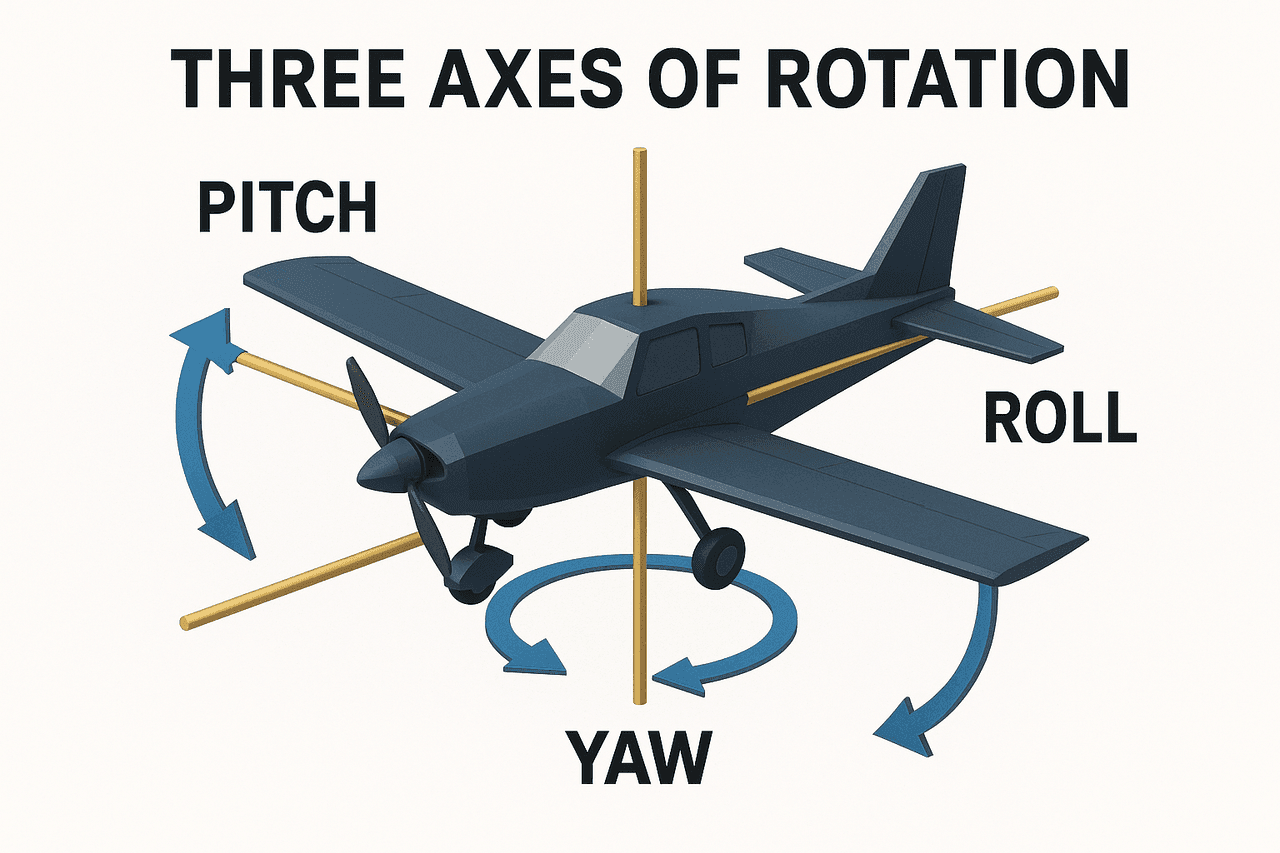
The aircraft moves about three axes: pitching up and down (Pitch) about the lateral axis, rolling (Roll) about the longitudinal axis, and yawing (Yaw) about the normal axis.
5.2 A Heart That Beats With Pistons
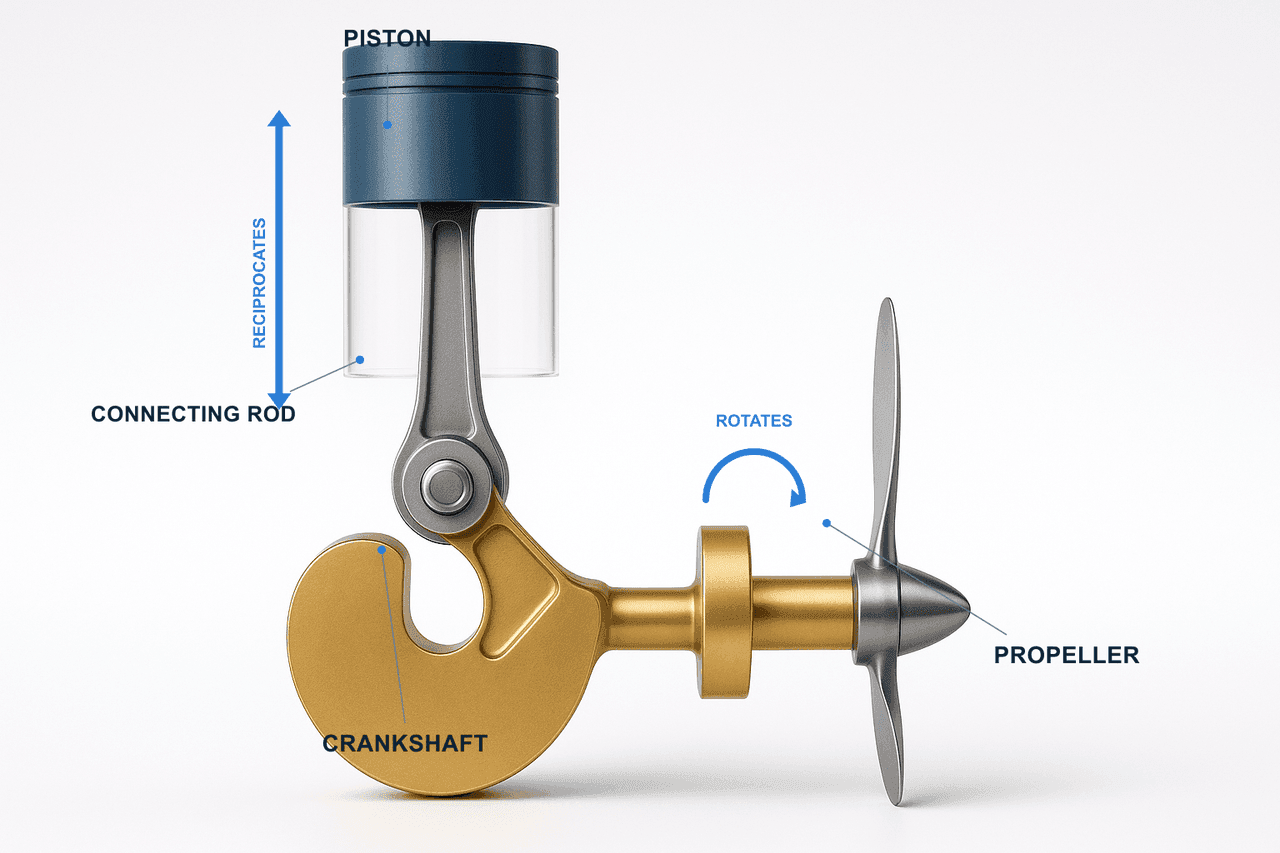
The piston engine works by a simple but clever mechanism: it turns the up-and-down stroke of the pistons into the rotation of the propeller, through the crankshaft.
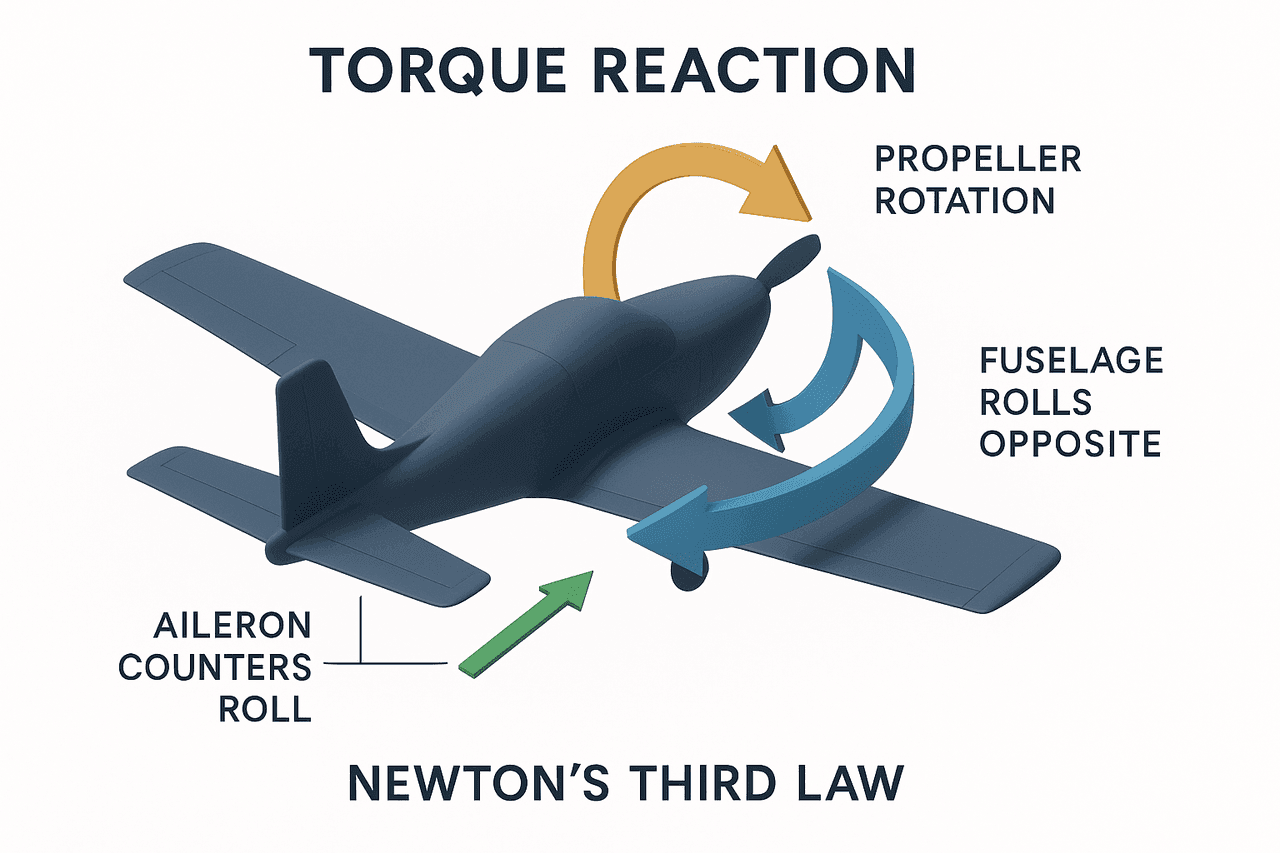
A propeller-driven engine has a phenomenon called torque reaction: as the propeller turns one way, the aircraft tends to rotate the opposite way, making it bank. The pilot must compensate with control inputs.
5.3 Pitot-Static and Gyroscopic Instruments
- The Airspeed Indicator (ASI) compares total pressure from the pitot tube with static pressure.
- The Altimeter and the Vertical Speed Indicator (VSI) use static pressure.
- If the static port becomes blocked, open the spare port (Alternate Static Port).
- Attitude instruments such as the AI, HI, and Turn Coordinator are driven by a gyroscope, via a vacuum or electrical system.
- The HSI (Horizontal Situation Indicator) combines the gyro compass with the VHF navigation receiver in a single instrument face.
Chapter summary
The core content is the three axes of motion, the piston engine, pitot-static and gyroscopic instruments, plus the oil system — focusing on understanding the principles and the symptoms when a system fails.
Key terms
The pressures that drive the ASI / Altimeter / VSI
Airspeed Indicator: total − static
A spinning rotor that drives the attitude instruments
Converts the piston's stroke into rotation
The aircraft banks opposite to the propeller's rotation
Frequently tested points
- Pitch about the lateral axis, Roll about the longitudinal axis, Yaw about the normal axis
- ASI = total (pitot) − static; Altimeter & VSI use static only
End-of-chapter quiz
24 questions