Principles of Flight
The balance of the four forces, how lift is created, stalling at the critical angle, the two types of drag, and stability versus control — the heart of being a pilot.
This website is for educational use and initial exam preparation. Learners should verify against the official documents of their regulator and a flight instructor before real-world use. Content is based mainly on EASA standards; some figures and rules may differ from the Thai CAAT syllabus.
This is an independent educational project. It is not affiliated with, endorsed by, or connected to EASA, ICAO, CAAT, or any regulatory authority. Questions are either originally written or drawn from publicly available / openly licensed official sources (e.g. FAA public-domain material and Transport Canada's PSTAR question bank), attributed per question. They are not the live EASA or CAAT exam.
If there is only one chapter you should truly understand rather than memorise, this is it. Once you grasp how a wing creates lift and why an aircraft stalls, everything else connects beautifully into a single picture.
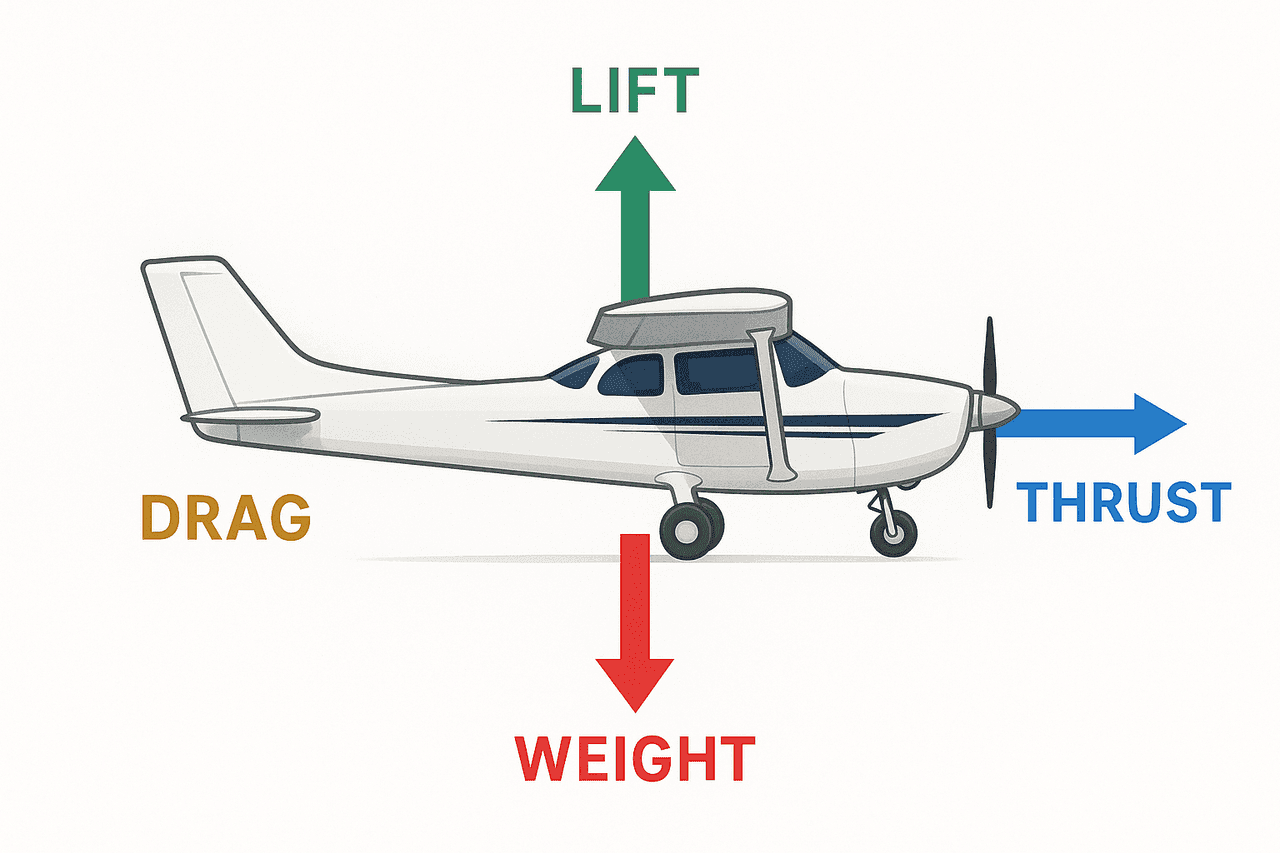
8.1 How a Wing Creates Lift
The shape of a wing (the aerofoil) has terms you must know, including the angle of attack, the chordline, and camber. As air flows over the wing, a pressure difference develops between the upper and lower surfaces, producing lift acting perpendicular to the airflow.
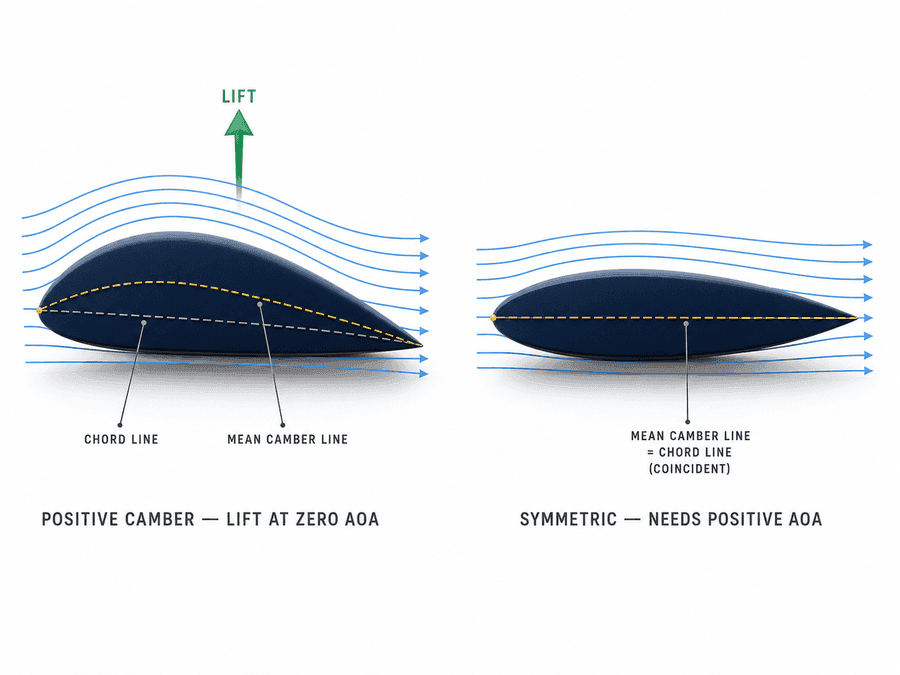
8.2 Angle of Attack and the Stall
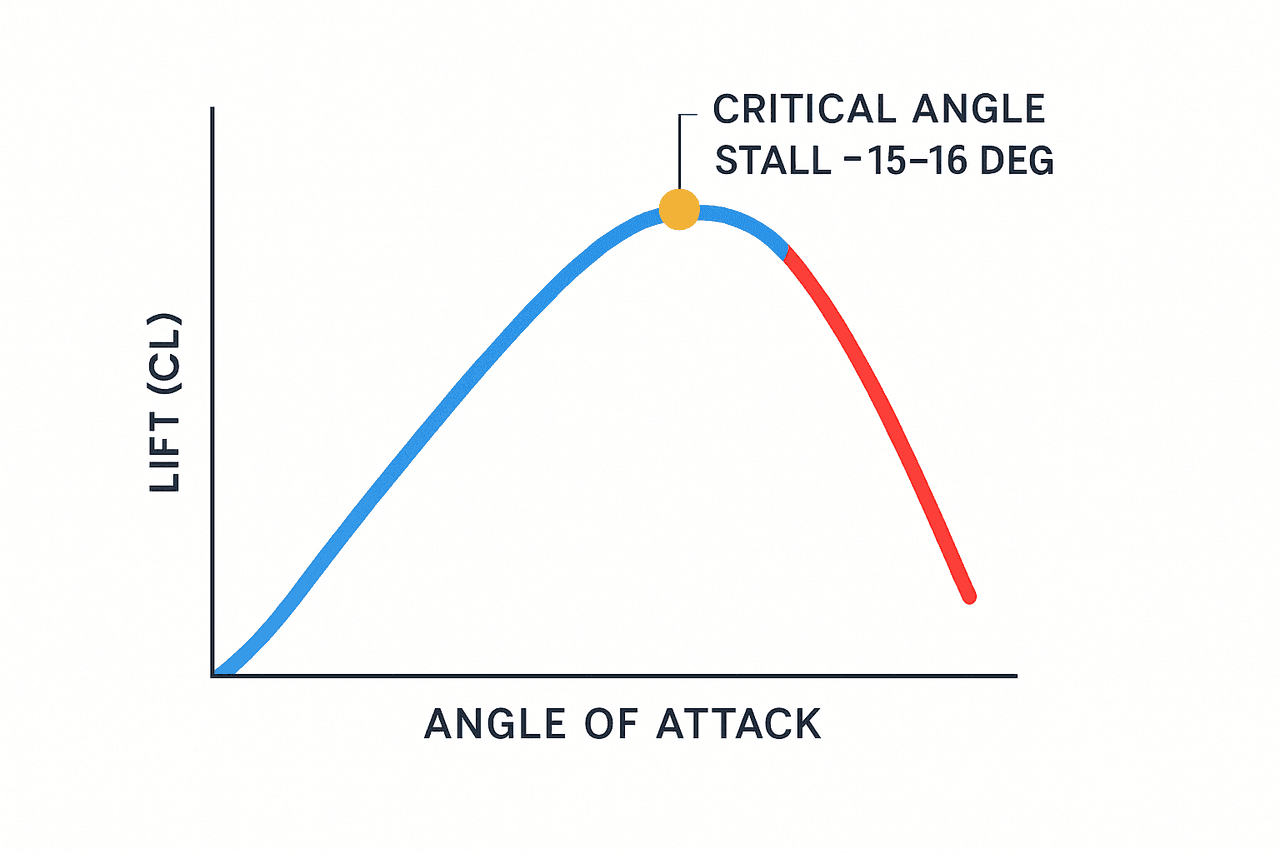
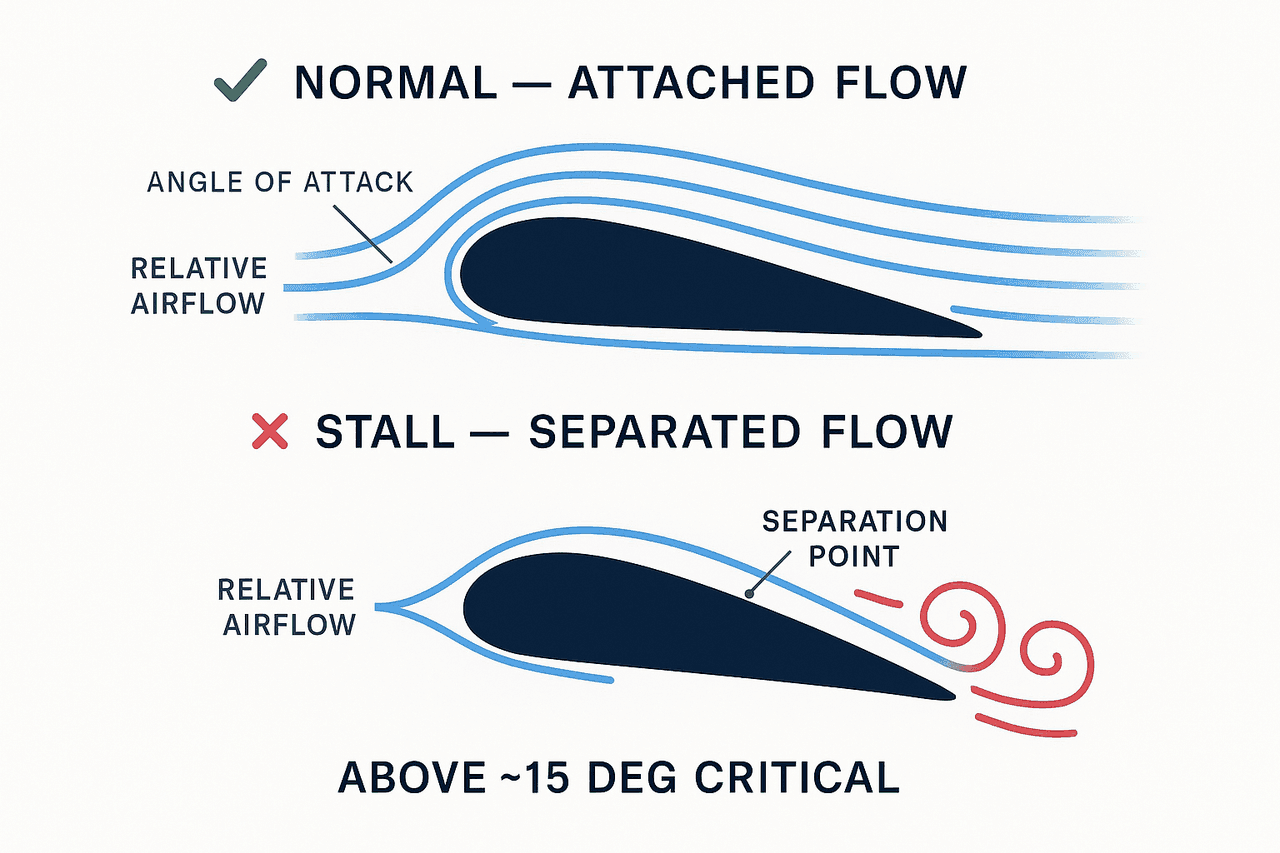
The more you increase the angle of attack, the more lift you get, but there is a limit. Once you exceed the critical angle of attack, around 15–16 degrees, the airflow separates from the wing's surface (separation) and lift drops away rapidly. That is a stall.
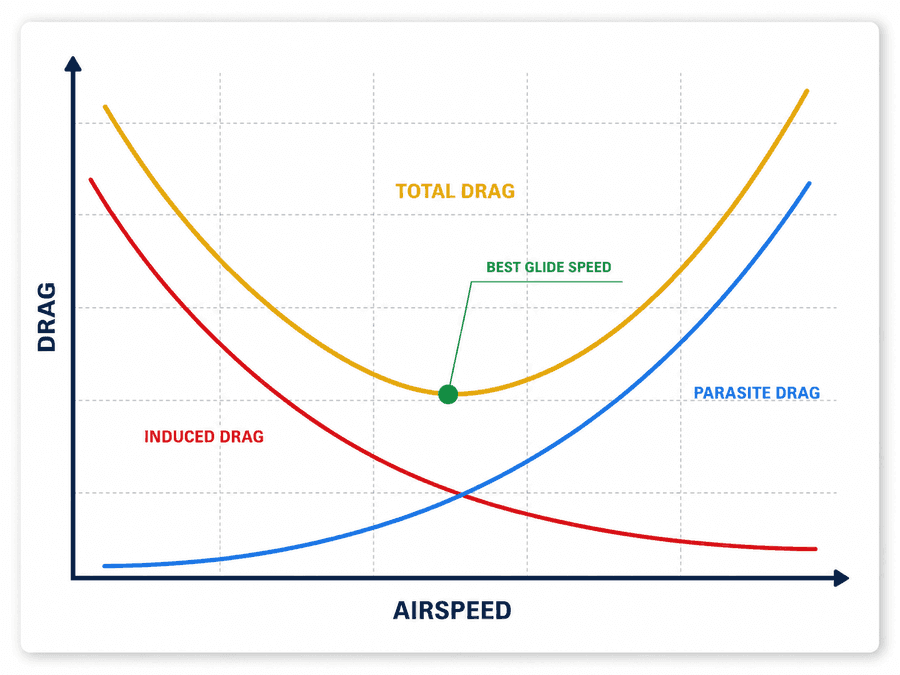
8.3 The Two Types of Drag
Drag comes in two types that alternate in prominence depending on speed:
- Induced drag arises from the production of lift and is dominant when flying slowly.
- Parasite drag arises from shape and surface and is dominant when flying fast.
The point where their sum is lowest is the best glide speed.
8.4 Stability and Control
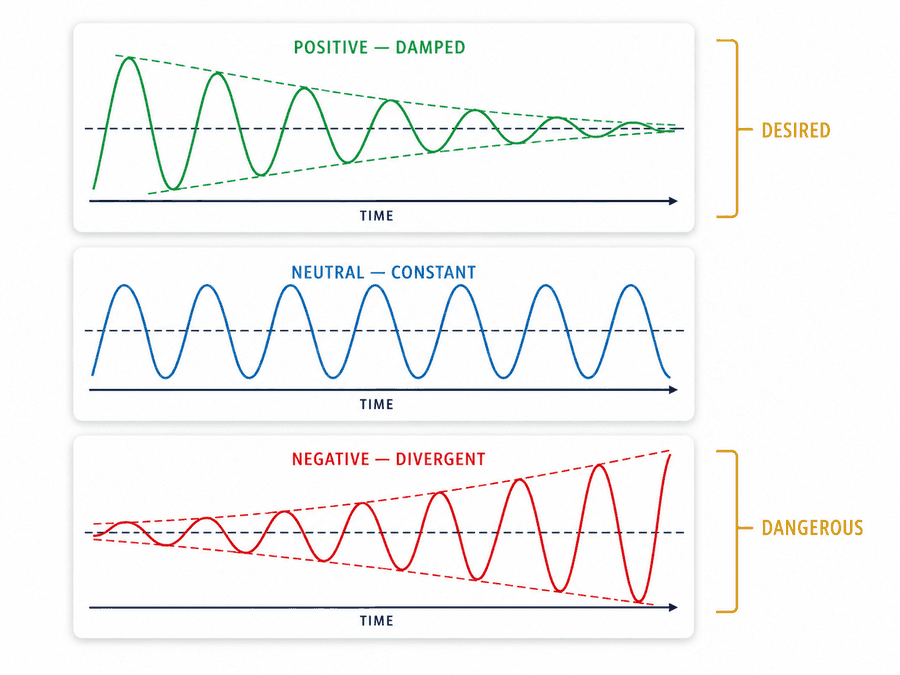
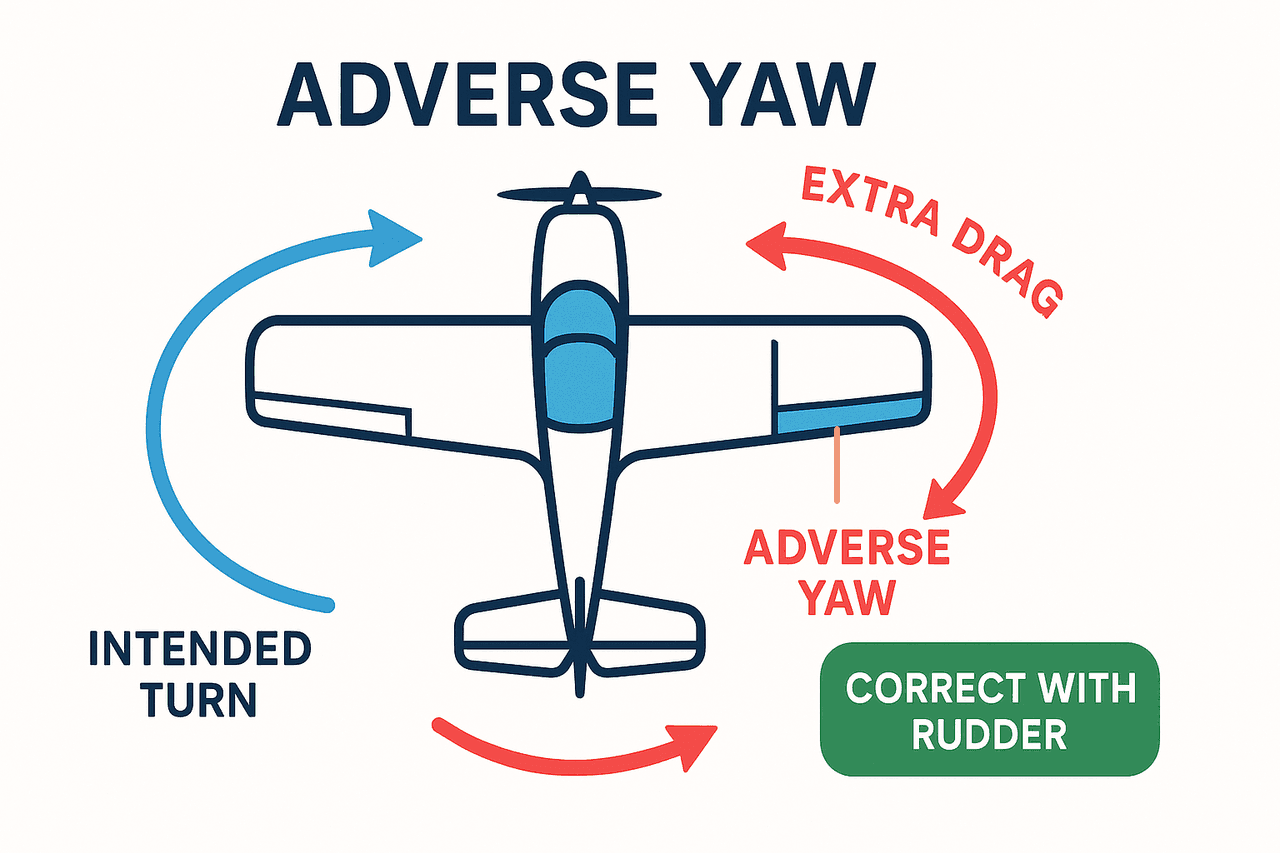
Stability is the tendency of an aircraft to return to its original flight condition after being disturbed by the wind. The primary control surfaces are the ailerons, which control roll, the elevator, which controls pitch, and the rudder, which controls yaw.
There are also leading-edge devices, namely slats and slots, which allow flight at a higher angle of attack before stalling, while flaps increase lift when flying slowly.
Chapter summary
The core content is the balance of the four forces, how lift is created, stalling at the critical angle, the two types of drag, and stability versus control. This chapter is the heart of being a pilot.
Key terms
Holds the aircraft up / resists its motion.
The angle between the chordline and the airflow.
The wing loses lift when the critical angle is exceeded.
The tendency to return to the original state after a disturbance.
Dominant when slow / dominant when fast.
Frequently tested points
- A stall occurs at the critical angle (a fixed angle), not at a speed
- induced drag is dominant when slow, parasite drag is dominant when fast
End-of-chapter quiz
24 questions