Human Performance
The limits of the body and the mind — hypoxia, illusions and spatial disorientation, the effects of alcohol and carbon monoxide, and the importance of trusting the instruments over your feelings.
This website is for educational use and initial exam preparation. Learners should verify against the official documents of their regulator and a flight instructor before real-world use. Content is based mainly on EASA standards; some figures and rules may differ from the Thai CAAT syllabus.
This is an independent educational project. It is not affiliated with, endorsed by, or connected to EASA, ICAO, CAAT, or any regulatory authority. Questions are either originally written or drawn from publicly available / openly licensed official sources (e.g. FAA public-domain material and Transport Canada's PSTAR question bank), attributed per question. They are not the live EASA or CAAT exam.
Many people believe that aviation accidents are caused by mechanical failure, but the statistics point the other way: most are caused by the human being. This chapter therefore takes you to explore the limits of the body and the mind.
3.1 Breathing at Altitude: Hypoxia
Oxygen travels through the alveoli into the bloodstream, after which haemoglobin carries it to nourish the whole body. The problem is that the higher you fly, the lower the partial pressure of oxygen becomes, so less oxygen can enter the blood.
3.2 Ears, Eyes, and Being Fooled by the Brain
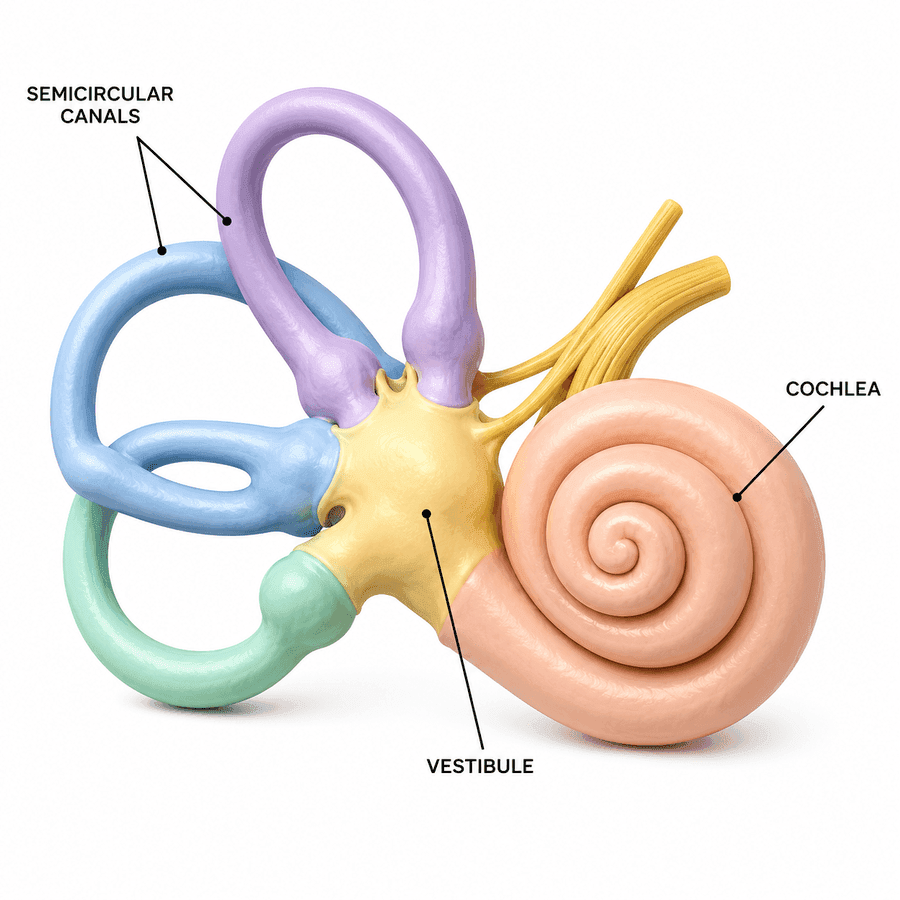
The inner ear handles both hearing and balance. It is the vestibular system that is the culprit, because it can fool our perception and cause spatial disorientation — for example, feeling that the aircraft is banking when it is actually flying straight.
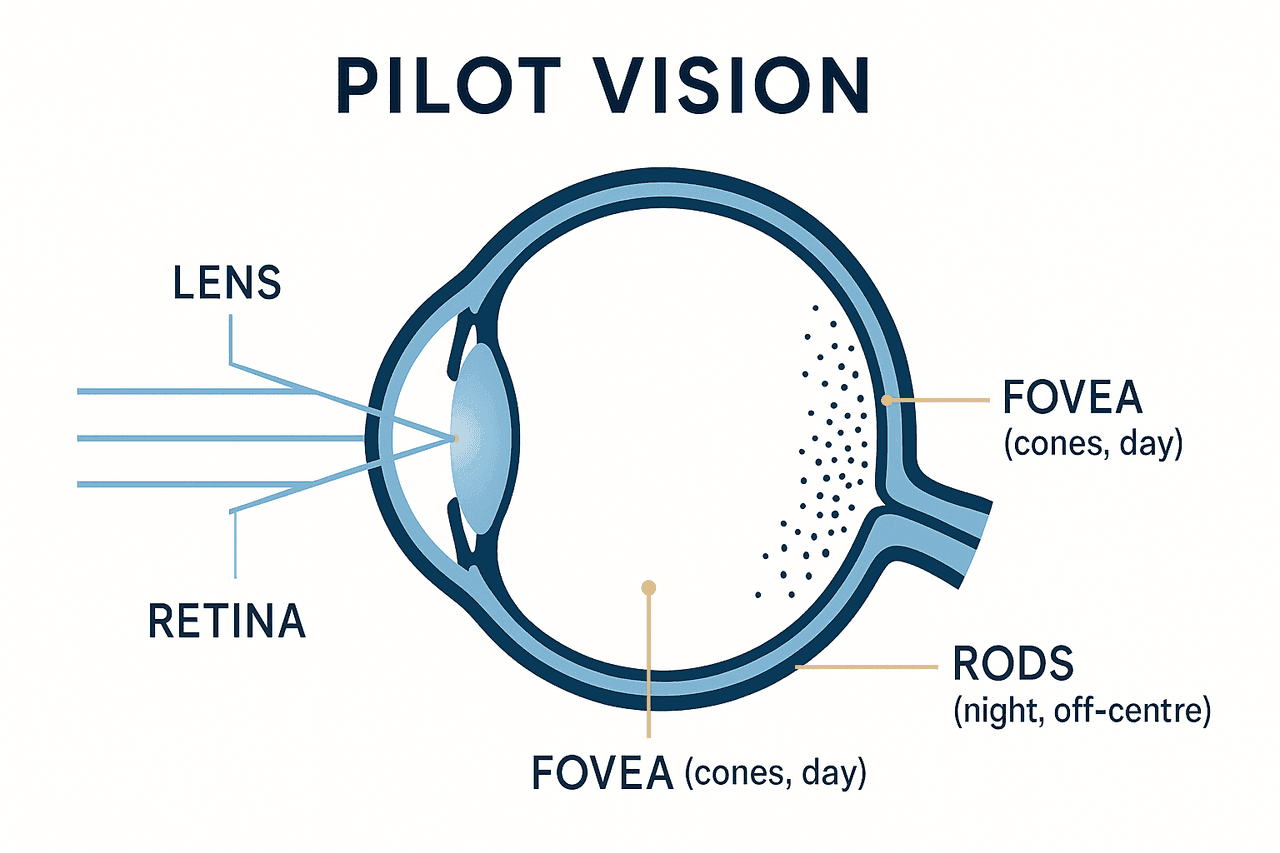
As for vision, we see most sharply at the fovea in the centre of the retina, and the eyes need time to adjust when entering darkness (dark adaptation). The dangerous part is illusions: for example, an upsloping runway makes you feel you are flying higher than you really are, while a wide runway makes you feel you are flying lower than you really are.
3.3 Health and Decision-Making
- Alcohol: the liver processes it at a fixed rate, about one unit per hour, which cannot be sped up, so you must allow time before flying.
- Carbon monoxide (CO): leaks from the exhaust into the cockpit and crowds out the oxygen in the blood — potentially fatal.
- Gastroenteritis: vomiting and diarrhoea, easily transmitted — absolutely do not fly.
- Stress: the best level of arousal is slightly below the peak; if it is too high or too low, performance falls in both cases.
Chapter summary
The body and the mind have limits you must be aware of: hypoxia when flying high, illusions and spatial disorientation from the vestibular system, the effects of alcohol, carbon monoxide, and illness, as well as the importance of trusting the instruments over your feelings.
Key terms
The body not getting enough oxygen when flying high.
The brain perceiving direction or attitude incorrectly.
The organ that senses balance.
The point at the centre of the retina that sees detail most sharply.
A toxic gas from the exhaust that binds to haemoglobin in place of oxygen.
Frequently tested points
- The higher you go, the lower the oxygen pressure → risk of hypoxia (the proportion of O₂ stays constant at 21%).
- Spatial disorientation → trust the instruments, not your feelings.
End-of-chapter quiz
18 questions